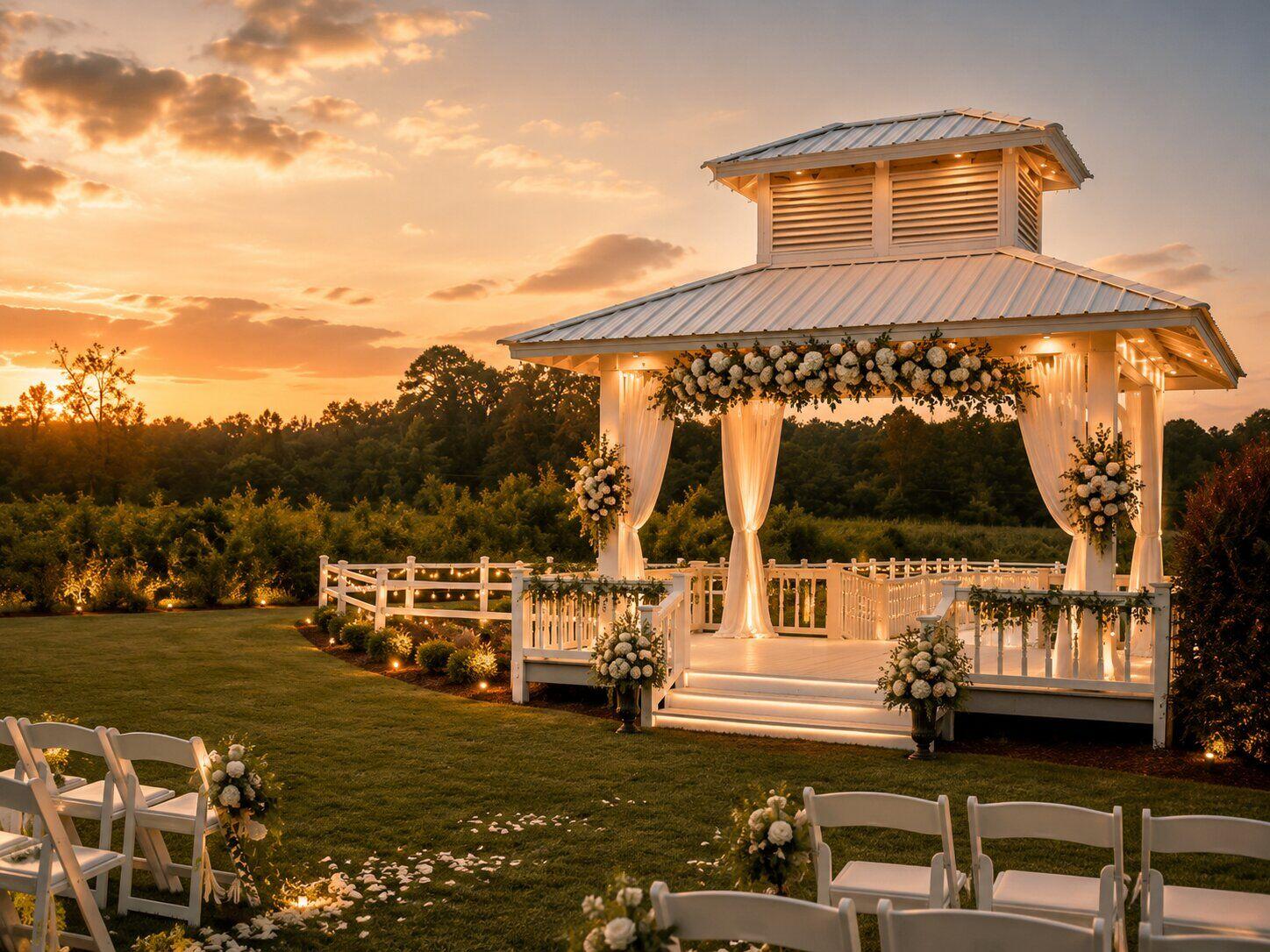
Two event proposals can quote different numbers for what appears to be the same party, while describing very different responsibilities. One may include a particular layout and service team; another may leave furniture, coordination, or cleanup for the host to arrange. The solution is not to choose the longest document. It is to make each venue answer the same questions, then compare the complete event you would actually be hosting in Benson, Raleigh, or anywhere else.
Start with one written event brief
Before comparing, give every venue identical assumptions: event type, preferred date and backup date, estimated guest range, desired start and finish, food format, and activities. Note whether you need a presentation, dance area, separate welcome space, or quiet conversation zone. If a venue quotes for 80 guests while another quotes for 120, the totals are not yet comparable.
Ask for a proposed layout and specify whether guests are seated simultaneously. Capacity alone does not tell you whether a room can accommodate dinner, a buffet, and a stage comfortably. Include needs such as step-free routes and proximity to restrooms in your brief. If a detail is undecided, label it as an assumption rather than allowing venues to fill in different answers.
- Use the same guest count and service style for each request.
- List required spaces and equipment separately from nice-to-haves.
- Record every assumption that could change the proposal.
Compare usable time, not just hours on paper
Separate guest-facing time from setup, vendor access, and breakdown. For example, Havenwing's private-event guide describes a four-hour event and one hour total for setup and breakdown. Ask exactly when each period starts and ends under the current agreement. A proposal with more apparent hours can still be difficult if vendors cannot access the room when they need to.
Ask which spaces are available throughout the event and whether a room change or weather contingency affects timing. If your guests are coming from the Triangle after work, a rushed arrival may matter more than a long late-night finish. Compare how each proposed schedule fits the real program, including introductions, meals, speeches, and departures.
- Draw a simple timeline for every proposal.
- Check load-in and load-out windows against vendor plans.
- Flag any program segment that depends on an unconfirmed extension.
Put inclusions and exclusions side by side
Create rows for tables, chairs, linens, place settings, sound, lighting, staff, coordination, food, beverages, security requirements, parking arrangements, cleanup, and weather coverage. Not every event needs every item, and a venue may bundle them differently. The point is to discover who supplies each necessary component and who pays for it.
Request clarification in writing when language such as event support or basic setup is vague. Does setup mean furniture placement, decor installation, or simply access for your own team? Who removes trash and personal items? What is the policy for outside vendors? Avoid assuming a service is included because another venue offered it.
- Mark each item included, additional, host-provided, or unanswered.
- Ask for current written terms rather than relying on a web snippet.
- Include taxes and other applicable charges only when documented.
Stress-test the plan for guests and weather
Visit or request a walk-through with your likely floor plan in mind. Follow the route from parking to the main room, restrooms, and any outdoor area. Ask how guests with mobility needs would make the same trip. A space may look spacious empty but feel different when service stations and a check-in table are added.
For an outdoor element, request the actual alternate layout and decision process. Is the fallback suitable for the same guest count and activities? Who communicates a switch to vendors? If a proposal depends on favorable weather, identify which services or rentals would be affected. A contingency is part of the scope, not a decorative footnote.
- Compare the rain layout with the preferred layout.
- Ask about wayfinding after dark.
- Check whether travel and parking directions are easy to share.
Review risk and make a decision you can explain
Read the current agreement for payment milestones, cancellation and rescheduling provisions, insurance requirements, vendor restrictions, and the process for changing headcount or schedule. Do not infer terms from an old brochure. If your organization requires legal or purchasing review, build that time into the decision rather than promising a date before approval.
Finally, score each venue against the priorities in your original brief: program fit, guest comfort, clarity of responsibilities, location, and total documented cost. An option that needs a few clarifications may still be right; an option with unresolved essentials is not ready to compare. Keep your questions and answers together so your team can revisit the reasoning later.
- Identify who has authority to sign the agreement.
- Resolve major unknowns before sharing a final invitation.
- Keep the approved proposal attached to the final event plan.
Frequently asked questions
What if venues structure their quotes differently?
Translate each quote into the same categories: time, space, food and beverage, equipment, staffing, outside vendors, and contract obligations. Ask the venue to clarify any category that remains blank.
Is the lowest rental figure the lowest event cost?
Not necessarily. Compare the full documented scope and the work you must arrange separately. Do not add guessed charges; request written clarification for anything unknown.